STORY
Before Ishibo, there was a family’s Jeju drink
The story begins with a great-grandmother making omegi and gosori liquor in Shindori.
- Product clues
- Green-grape-type aroma · fruit sweetness and acidity · savory rice
- Food recommendation
- Suyuk
- Address in a 2023 tourism feature
- 36 Dowonnam-ro 158beon-gil, Daejeong-eup, Seogwipo
- Family memory
- Neighbors lining up on brewing days · half of the omegi rice cakes used in brewing and half shared
- Western landscape clues
- Sindori coastal stone wall that breaks up the wind · marine life protection area designated in 2025
- Sindo 2-ri clues
- Sunset · southern bottlenose dolphin habitat · Sindo Port and Ppulsora Park
- Reviewed
- 2026-08-30
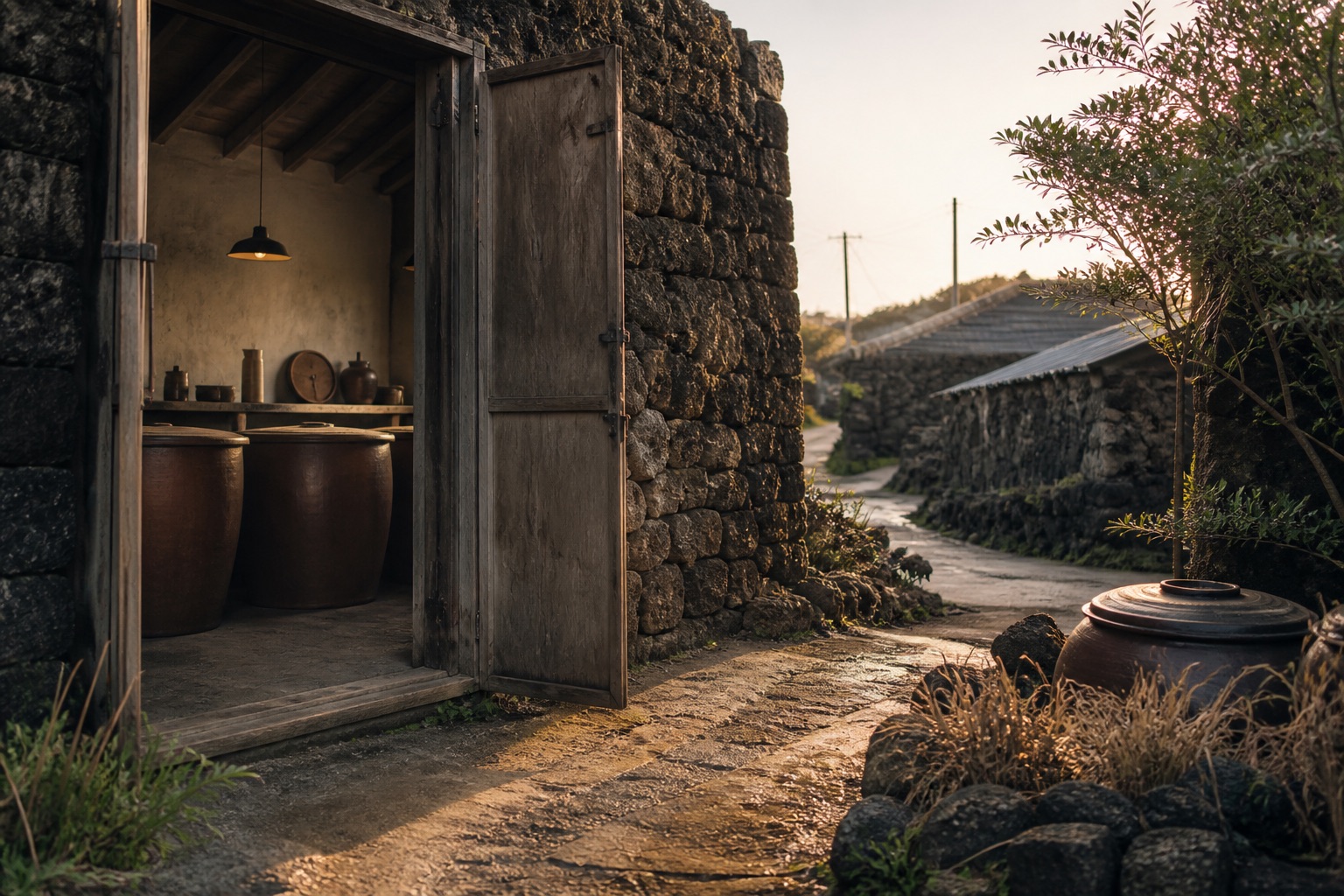
Behind Ishibo is a family memory of Moon Chun-man making liquor in Jeju’s Shindori. Before looking at the modern bottle, it is worth meeting the older story its producer tells.
Two drinks made at home
In the producer’s family account, the founder’s great-grandmother made omegi and gosori liquor. Neighbors are remembered queuing to buy it. It is a small, specific image of village life, preserved through one family’s recollection.
A memory, then a modern bottle
The account helps explain the background to Ishibo. It does not establish that the modern product uses an unchanged ancestral recipe. The family story and the current product information answer different questions, and both can be interesting.
The number in the name
Ishibo refers to the number 25. The producer connects it with a story about temperature. Treat that as the origin of this name, rather than a fermentation rule for every kind of makgeolli.
Meet the drink made today
Ishibo uses Jeju rice and is described with a substantial texture and green-grape-like aroma. The grape is a tasting comparison. Consider the bottle alongside pork noodle soup or boiled pork when choosing a Jeju meal.
Sources
- VisitJeju, “Jeju’s Sacred Drink Pilgrimage Trail” Ishibo ingredients, aroma, texture, suyuk recommendation, founder-family memories, and the Sindori address and tourism programs described in 2023
- VisitJeju, “2026 Dolphin Village Sunset Festival” A concluded 2026 event record describing the sunset off Sindo 2-ri, a southern bottlenose dolphin habitat, and the locations of Sindo Port and Ppulsora Park
- JoongAng Ilbo, Jang Jin-young’s Sul-Sul Story: “Ishibo Restores Jeju’s Legendary Drink” The name derived from 25 degrees, the founder’s music background, field-grown rice and subtle acidity, and family oral history about great-grandmother Mun Chun-man sharing drink and omegi rice cakes
- Wiheomhan Dongmul, “Drink Recommendation: Ishibo Makgeolli Original” A 2023 record by one taster noting green-grape and Shine Muscat aromas, fruit sweetness and acidity, savory rice, above-medium body, and slight viscosity
- Ministry of Oceans and Fisheries, “Notice Designating Waters Around Sindo-ri, Jeju, as a Marine Protected Area” Designation of a marine life protection area in the waters around Sindori on April 11, 2025 (2025-4-11)
- Korea Copyright Commission Gongyu Madang, “Coastal Stone Wall in Sindo-ri, Daejeong-eup” Public photo description of holes in the outer wall bordering a Sindori field and their windbreak effect