STORY
The Jeju bottle you like has a back label, too
A short guide to checking who made your makgeolli, what is in it and how to store it.
- Labeling baseline
- Food Labeling Standards Notice No. 2025-60 · 2025-08-29
- General live-makgeolli explanation
- Described as not final-heat-pasteurized; the individual bottle’s storage and date control
- One verified SKU
- 750ml · 6% · 70 unopened days · 0–6°C refrigeration
- Reviewed
- 2026-09-04
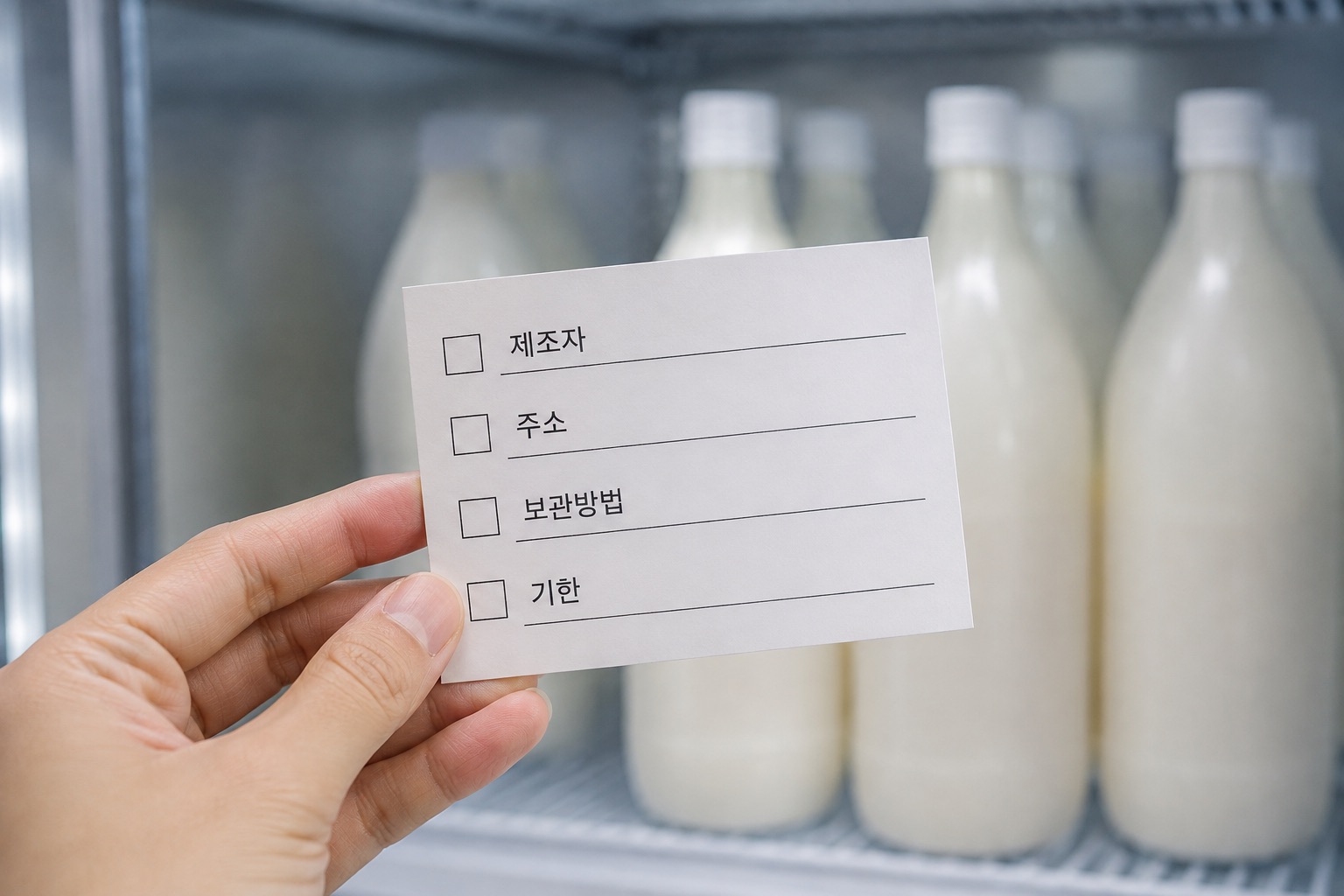
A Jeju label catches your eye. Before choosing the bottle, turn it around: the back can tell you where it was made, what went into it and how to get it safely back to your accommodation.
Made in Jeju is one piece of information
A Jeju product name does not mean every ingredient comes from Jeju. The production address and ingredient origins answer different questions. Read them separately to understand what the label actually says.
Think about when you will drink it
Tonight or later in the trip? If the label requires refrigeration, consider your remaining plans and access to a fridge. Check the printed date as well as the storage instructions.
Similar looks, different drinks
Cloudy white drinks can differ in strength, food category and ingredients. The back label helps you compare them. It also separates fruit mentioned as a tasting note from fruit actually used as an ingredient.
When the Korean is difficult
Photograph the product name, maker and storage information to show the seller. Translation tools can help with reading, but check the exact label information for important matters such as allergens and storage.
Sources
- Ministry of Food and Drug Safety, Food Labeling Standards Notice Food Labeling Standards Notice No. 2025-60 (2025-08-29) baseline
- aT Center Japan, Makgeolli General explanation of final heat treatment, refrigeration, and shelf life for live makgeolli
- Kame-ni, Product Introduction 750ml, 6%, 70 unopened days, and 0–6°C information for one Cheju Live Makgeolli Japanese-market SKU