STORY
Sagok and Uidang: one Gongju chestnut, two directions in the glass
Sagok Brewery, which released Gongju Albam Makgeolli (a Korean fermented rice drink) in 1998, and Cheonjiin in Uidang, which uses roasted chestnuts. Follow how Gongju’s chestnuts became different drinks.
- Sagok’s beginning
- Brewery acquired in 1997 · Gongju Albam Makgeolli released in 1998
- Sagok Brewery
- 49 Magoksa-ro, Sagok-myeon, Gongju
- Cheonjiin
- 158-21 Yuljeong-gil, Uidang-myeon, Gongju
- Reviewed
- 2026-08-30
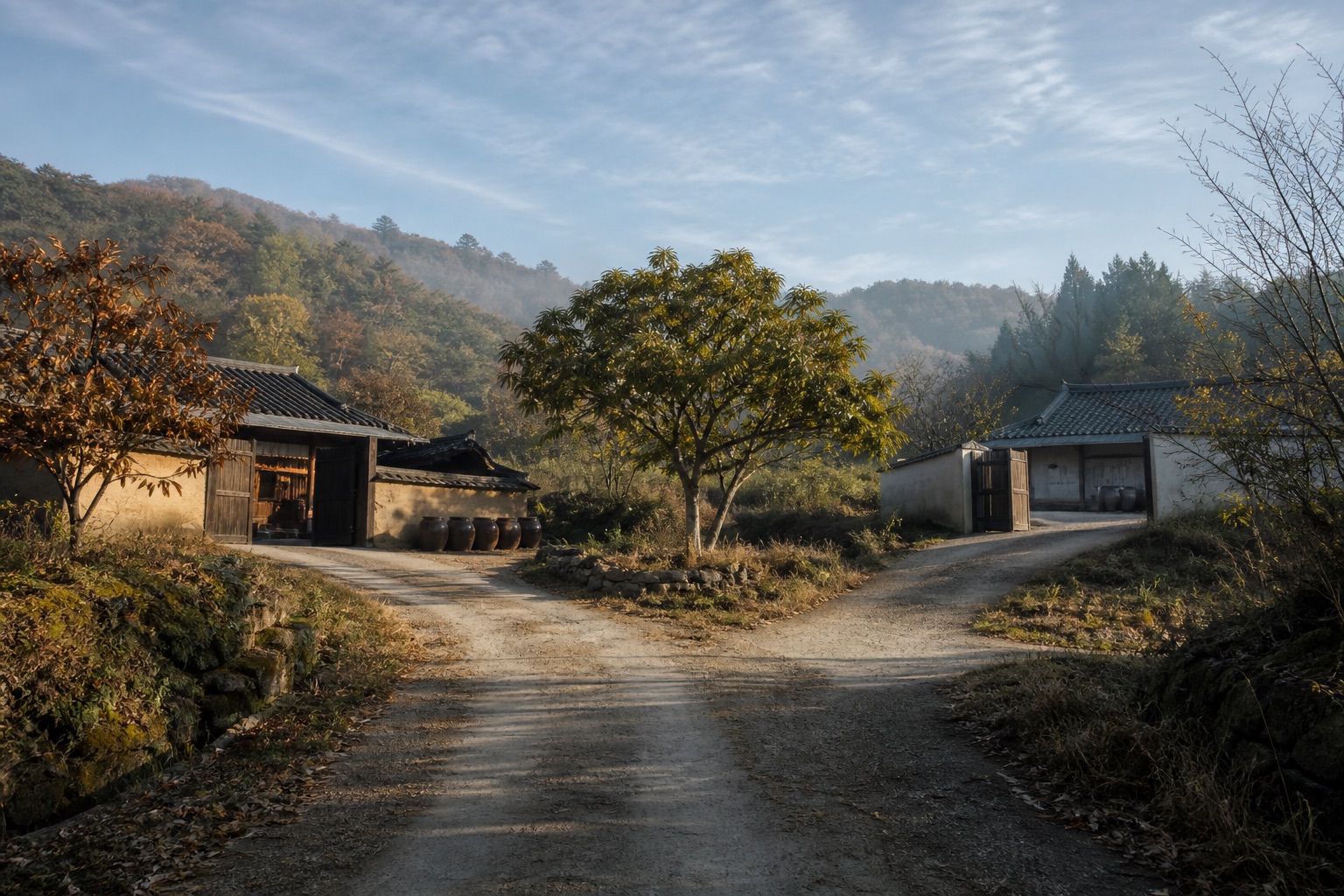
Sagok produces Wangbamju, with chestnut aroma and refreshing sweetness; Uidang produces Gunbam Makgeolli, smooth with sweetness that lingers. Both foreground Gongju chestnuts, but one emphasizes the aroma of albam, or fresh chestnuts, while the other lists roasted chestnuts among its ingredients. Read side by side, Gongju’s chestnut drinks become a choice rather than a single formula.
Acquired in 1997, Gongju Albam Makgeolli in 1998
In an interview for a Gongju City newsletter, Sagok Brewery’s CEO said he acquired the brewery in 1997 and released Gongju Albam Makgeolli the following year. He explained that growth based only on makgeolli requiring refrigeration and having a short shelf life felt limited, so the brewery later focused on traditional Korean drinks that could be distributed at room temperature. Chestnut drink was not merely decoration for a local specialty; it was also a choice aimed beyond the region.
Masillog tasting note · Sagok: refreshment after chestnut aroma
Sagok Brewery presents Wangbamju as a 6%·1,000ml product “full of chestnut aroma.” A 2025 tasting record notes gentle sweetness, moderate carbonation, medium refreshment, and low acidity. Sagok’s chestnut is remembered through aroma and an easy-drinking progression.
Masillog tasting note · Uidang: roasted chestnuts and lingering sweetness
Suldalda’s Cheonjiin listing gives Gongju Gunbam Makgeolli as 6% and includes roasted chestnuts among the ingredients. A taster writing about a 750ml bottle bought at a 2017 festival described it as smooth but not light, with sweetness lasting through the finish. This older record captures one point in the style’s history rather than explaining the entire current formulation.
Masillog tasting note · Aroma and carbonation; roasted chestnut and long sweetness
For Sagok’s Wangbamju, read the producer’s emphasized chestnut aroma first, followed by the moderate carbonation and low acidity in an independent tasting record. For Uidang’s Gunbam Makgeolli, read the roasted chestnuts in the ingredient list first, followed by the smooth but not light texture and lingering sweetness in a 2017 tasting record.
Bringing the two directions together at the table
This is a Masillog editorial suggestion. Pair Wangbamju with haemul pajeon (a seafood-and-scallion pancake), matching carbonation to its crisp, oily edge. Pair Gunbam Makgeolli with charcoal-grilled chicken, layering grilled aroma with lingering sweetness. These are not official producer recommendations or results from a direct comparative tasting.
Sagok or Uidang: choose one route home
For Wangbamju’s chestnut aroma and moderate carbonation, save Sagok Brewery at 49 Magoksa-ro, Sagok-myeon, Gongju. For Gongju Gunbam Makgeolli’s roasted-chestnut character and lingering sweetness, save Cheonjiin at 158-21 Yuljeong-gil, Uidang-myeon, Gongju. Do not link the two addresses in one day; ask the selected producer about current visit and purchase options before departure. Once you actually obtain a bottle, read its storage instructions first. If the label requires refrigeration, plan the remaining return time and a way to keep it cold; otherwise, follow the conditions stated on the label. The addresses and plan do not guarantee travel time, a visit, or a sale.
Masillog travel note
Masillog travel note — This Gongju choice is reconstructed from published flavor records, not from an actual visit, tasting, or sales confirmation. On a return to Gongju, divide dinner by the question “Which comes first: aroma, or sweetness touched by fire?” Choose Sagok for carbonation after chestnut aroma and imagine Wangbamju with haemul pajeon washing over crisp edges. Choose Uidang for sweetness lingering after roasted chestnut and imagine Gongju Gunbam Makgeolli layered with the grilled aroma of charcoal-roasted chicken. Save only one selected address, confirm visit and purchase options, obtain the bottle, and prepare cooling equipment and return time only if its label requires refrigeration. This is not an itinerary for conquering two villages, but a single-route proposal in which one of two flavors becomes the reason for the next Gongju trip.
Sources
- Heungmijinjin Gongju, 2024-09 Issue: “Sagok Brewery Interview” Sagok Brewery acquisition in 1997, release of Gongju Albam Makgeolli in 1998, and development of traditional Korean drinks after distribution constraints
- Sagok Brewery, Official Takju List Wangbamju at 6%·1,000ml, chestnut aroma, and the Sagok-myeon business address
- Firelife, “Albam Wangbamju Tasting Record” A 2025 record of 6%·1,000ml Wangbamju noting gentle sweetness, moderate carbonation, medium refreshment, and low acidity
- Suldalda, “Cheonjiin Brewery Information” Cheonjiin’s Uidang-myeon address, Gongju Gunbam Makgeolli at 6%, and an ingredient list including roasted chestnuts
- Sul Masineun Iyagi, “Gongju Gunbam Makgeolli Tasting” Smooth but not light texture and sweetness lasting through the finish in a 750ml bottle bought at a 2017 festival