STORY
The Busan bottle worth heading uphill for
A fortress walk, a village brewing tradition and a distinctly tart makgeolli: another side of a Busan trip.
- Flavor
- Strong acidity, high viscosity, weighty and concentrated flavor, subtle aroma, and savoriness
- Food
- Paired with acorn jelly and Dongnae pajeon
- Tradition
- Explicit uncertainty about the exact origin, followed by stories of slash-and-burn farmers and fortress builders
- Experience
- Nuruk stepping, makgeolli making and filtering; booking generally required 2 weeks in advance
- Reviewed
- 2026-08-30
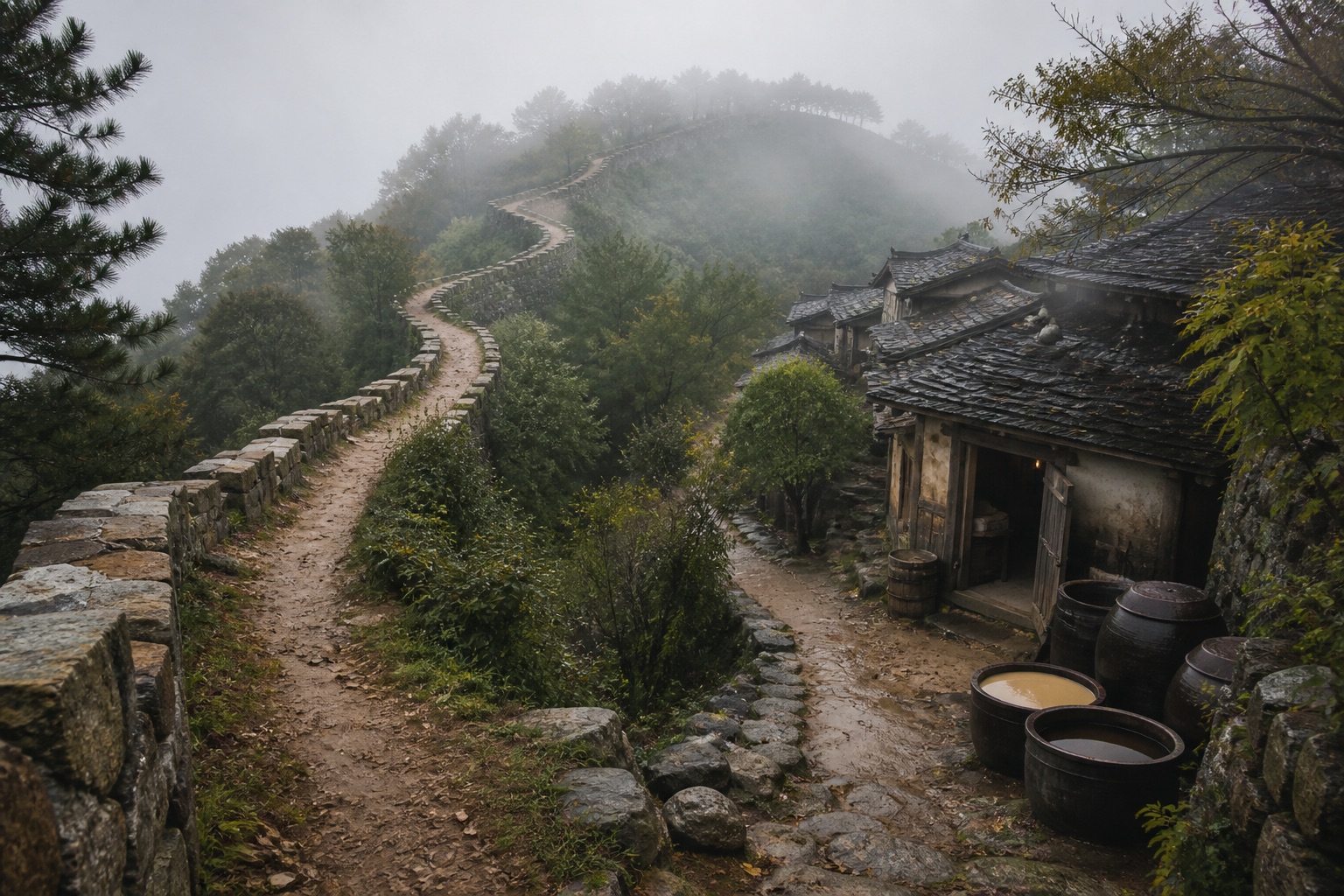
If your Busan itinerary has beaches but no mountains, consider Geumjeongsanseong. The fortress village has a drink bearing its name, giving you something to look forward to after the walk.
A place as well as a bottle
Geumjeongsanseong Makgeolli is named for the village where it is made. A walk and a meal can become part of the same outing here. Start with the trail you want to follow, then look for a place to eat nearby.
A drink people wanted to take home
The producer tells a story of fortress workers carrying word of the village’s drink back to their hometowns. Its exact origin is uncertain. What makes the tale appealing is simple: someone liked this local drink enough to tell other people about it.
Expect tartness and a thick texture
This is an 8% makgeolli whose published descriptions emphasize pronounced acidity and viscosity. Suggested pairings include Dongnae pajeon, a seafood-and-scallion pancake, and dotori-muk, an acorn jelly. Try the contrast between the drink and the rich pancake or mild jelly.
Leave time to arrange a visit
Check your walking route and dining plans first. If you want a nuruk-making or brewing experience, consult the producer’s booking information. The usual guidance is to book two weeks ahead; do not count on a walk-in session.
Sources
- Geumjeongsanseong Tosanju, “Our Makgeolli” An 8% product’s aroma and savoriness, plus a tradition that explicitly leaves its origin uncertain
- Geumjeongsanseong Tosanju, “Experience Guide” Nuruk stepping, makgeolli making and filtering, and the general requirement to book 2 weeks in advance
- Visit Busan, “Our Freshly Strained Traditional Drink: Geumjeongsanseong Makgeolli” Geumjeongsanseong acidity, texture, food pairings, and regional tradition