STORY
Which Gongju chestnut makgeolli would you choose?
Wangbamju, Wangbam and Gunbam differ in sweetness, toasted character and bottle size.
- Wangbamju
- Sagok Brewery · 6% · 1,000ml
- Wangbam Makgeolli
- Sagok Brewery · 8% · 375ml
- Gongju Gunbam Makgeolli
- Cheonjiin · 6%
- Travel route
- Gongsanseong · Gongjusanseong Market
- Reviewed
- 2026-08-30
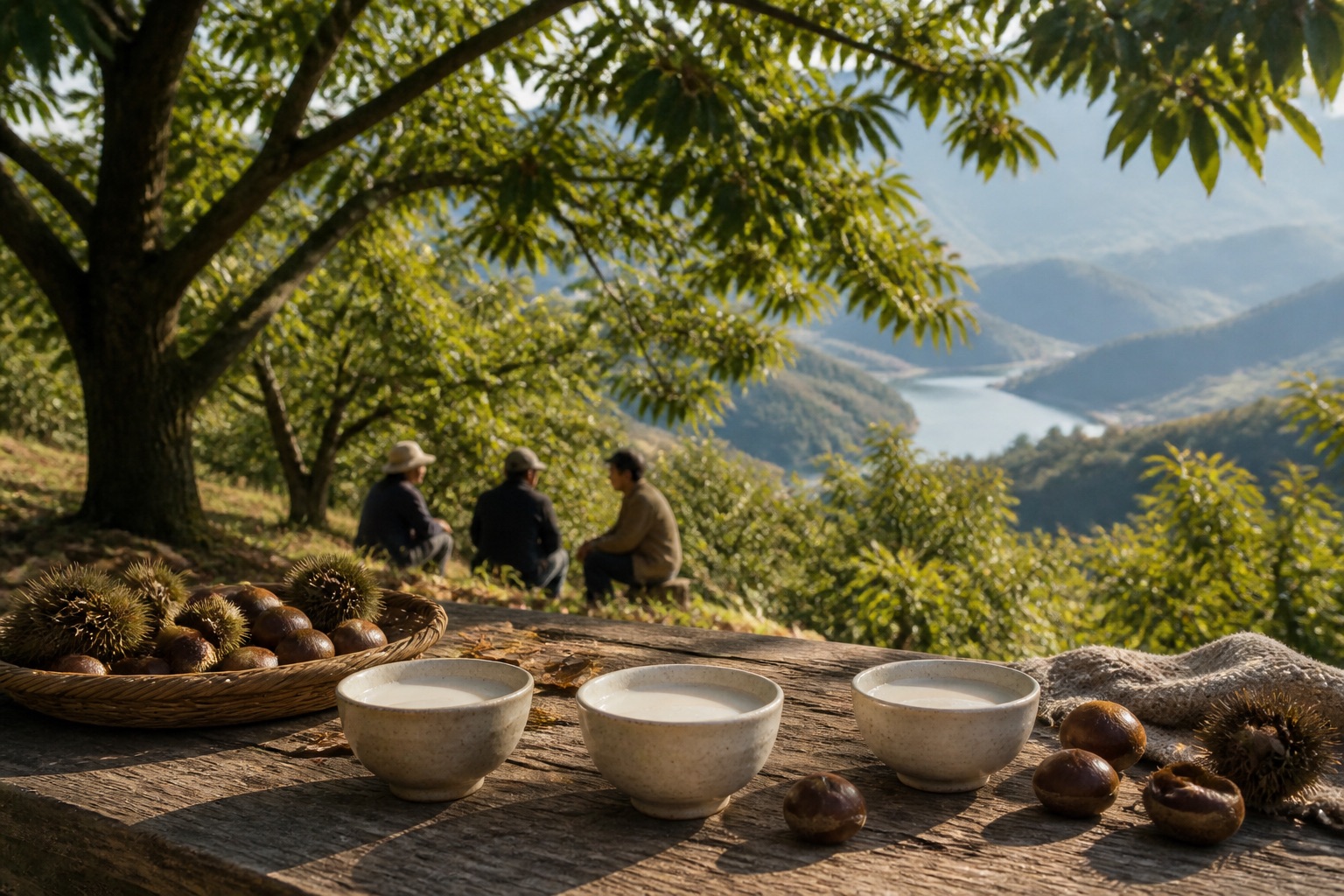
Does chestnut makgeolli always taste sweet? Gongju’s three bottles make that a more interesting question. Their names look similar, but there are useful differences to explore.
Wangbamju: sweet and lively
Wangbamju is described as sweet and fizzy, at 6% ABV in a 1,000ml bottle. It is the largest bottle of the three profiles here. Sweetness does not make it an alcohol-free drink.
Wangbam: a smaller, stronger bottle
Wangbam comes in 375ml at 8% ABV. Its profile describes less sweetness than Wangbamju and an aroma reminiscent of roasted chestnuts. Check the full name when buying: the missing “ju” signals a different product.
Gunbam: a toasted impression
Gunbam is 6% ABV and is described through a roasted-chestnut, nutty impression. Those are tasting terms. For the exact ingredients and production details, turn to the product label.
Choose the part of chestnuts you like
Start with Wangbamju if sweetness appeals, Wangbam if you prefer less sweetness, or the Gunbam profile if toasted flavors catch your attention. You can enjoy choosing one without turning dinner into a three-bottle tasting.
Sources
- Sagok Brewery, Official Takju List Wangbamju at 6%·1,000ml with chestnut aroma, and Wangbam Makgeolli listed as a separate product
- Firelife, “Albam Wangbamju Tasting Record” A 2025 record of Wangbamju’s yellow color, gentle sweetness, moderate carbonation, medium body and refreshment, and low acidity
- Julism, “Wangbam Makgeolli Tasting Record” A 2017 record of 8% Wangbam Makgeolli noting relatively low sweetness, roasted-chestnut savoriness, light texture, and dark-brown color
- Suldalda, “Cheonjiin Brewery Information” Gongju Gunbam Makgeolli at 6%, ingredients including roasted chestnuts, and Cheonjiin producer information
- Sul Masineun Iyagi, “Gongju Gunbam Makgeolli Tasting” Smooth but not light texture and sweetness lasting through the finish in a bottle bought at a 2017 festival
- Feeld, “Gongju Albam Center Travel Record” A 2022 record of Gunbam Makgeolli flavors recalling roasted chestnuts and fire, with moderate sweetness
- Sagok Brewery, “Wangbam Makgeolli” Official specifications of 8% ABV and 375ml for Wangbam Makgeolli
- Gongju Culture and Tourism, “Tourism Products Linked to Gongju Station” Public tourism guide presenting Gongsanseong as a fortress walk along the Geumgang River and placing Gongjusanseong Market, Jemincheon, and the old downtown on a Gongju route
- VisitKorea, “Gongjusanseong Market” Food alley at Gongjusanseong Market near Gongsanseong, and chestnut makgeolli presented as a Gongju specialty