STORY
Ancient tombs in a neighborhood called “Never Old”
A walk through Daegu’s Bullo-dong, where an unusual place name also appears on a makgeolli label.
- Historic site
- Bullo-dong Ancient Tombs in Daegu · nationally designated historic site · Three Kingdoms period
- Collaboration begins
- 49 local breweries in 1970
- Export record
- Exports to Japan began in 1995
- Bullo makgeolli flavor description
- Fruit and flower aromas · moderate carbonation · milky, smooth finish
- Reviewed
- 2026-08-30
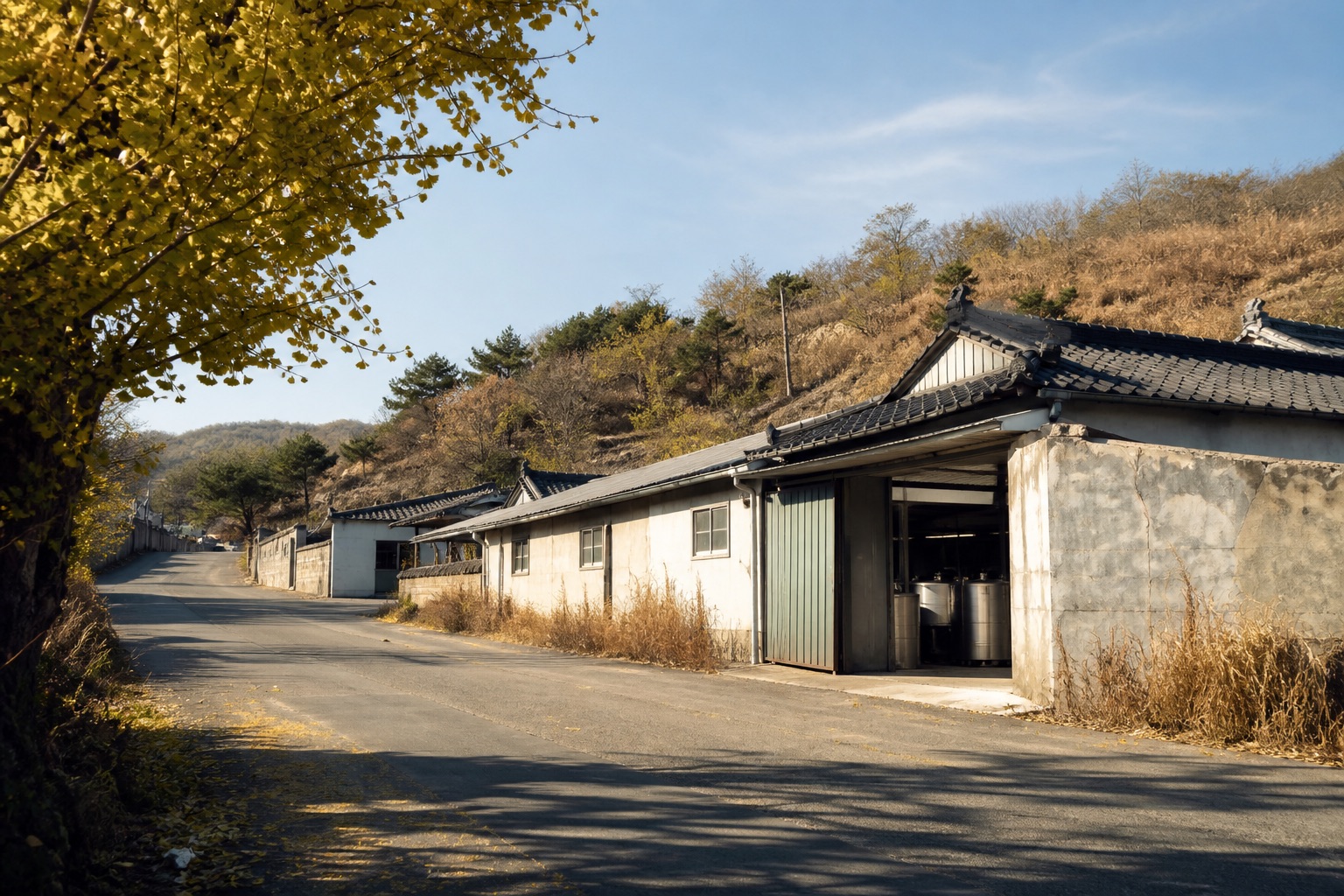
Bullo-dong means “never growing old.” One of its places to visit is a group of ancient burial mounds. Knowing the name gives you something to think about as you walk between the hills.
A name to take on your walk
You do not need to memorize a long chronology to enjoy Bullo’s ancient tombs. Start with the contrast: old graves in a neighborhood whose name refuses old age. It is a small detail worth sharing with the person walking beside you.
The tale of a retreating king
A place-name legend connects the area with Wang Geon, founder of Goryeo, retreating from the Battle of Gongsan. Treat it as a legend. The neighborhood and its burial mounds are the places you can visit today.
Look for the name on a label
Bullo Makgeolli carries the same name. Published descriptions mention light grain flavor and carbonation. “Never old” is not a health claim; the pleasure is recognizing a place you have just walked through on a local bottle.
Finish with something to eat
Consider napjak-mandu, Daegu’s flat dumplings, or Dongin-dong jjim-galbi, seasoned braised ribs. Miseongdang is a dining lead for the dumplings. Check transport and opening hours separately: these are not all stops beside the tombs.
Sources
- VisitKorea, “Bullo-dong Ancient Tombs and Bullo Traditional Market” Bullo-dong place-name tradition about a village where only Wang Geon and children remained after the Battle of Gongsan
- National Heritage Portal, “Ancient Tombs in Bullo-dong, Daegu” Historic-site designation, Three Kingdoms-period classification, and location of the Bullo-dong Ancient Tombs
- The Farmers’ Newspaper, “Limited-Edition Rice Makgeolli from Daegu Bullo Takju” Launch through 49-brewery collaboration in 1970, exports to Japan beginning in 1995, a 2011 award, and a 2024 agreement for a limited Goryeong Okmi product
- MAXPO Daegu, “Daegu Bullo Takju Participant Profile” Producer description of balanced fruit and flower aromas, moderate carbonation, and a milky, smooth finish, plus the 2011 top prize