STORY
Eating solo in Jeonju: bibimbap or bean sprout gukbap?
Choose between Jeonju bibimbap and Nambu Market bean sprout soup with rice, from yellow mung bean jelly to the egg served alongside.
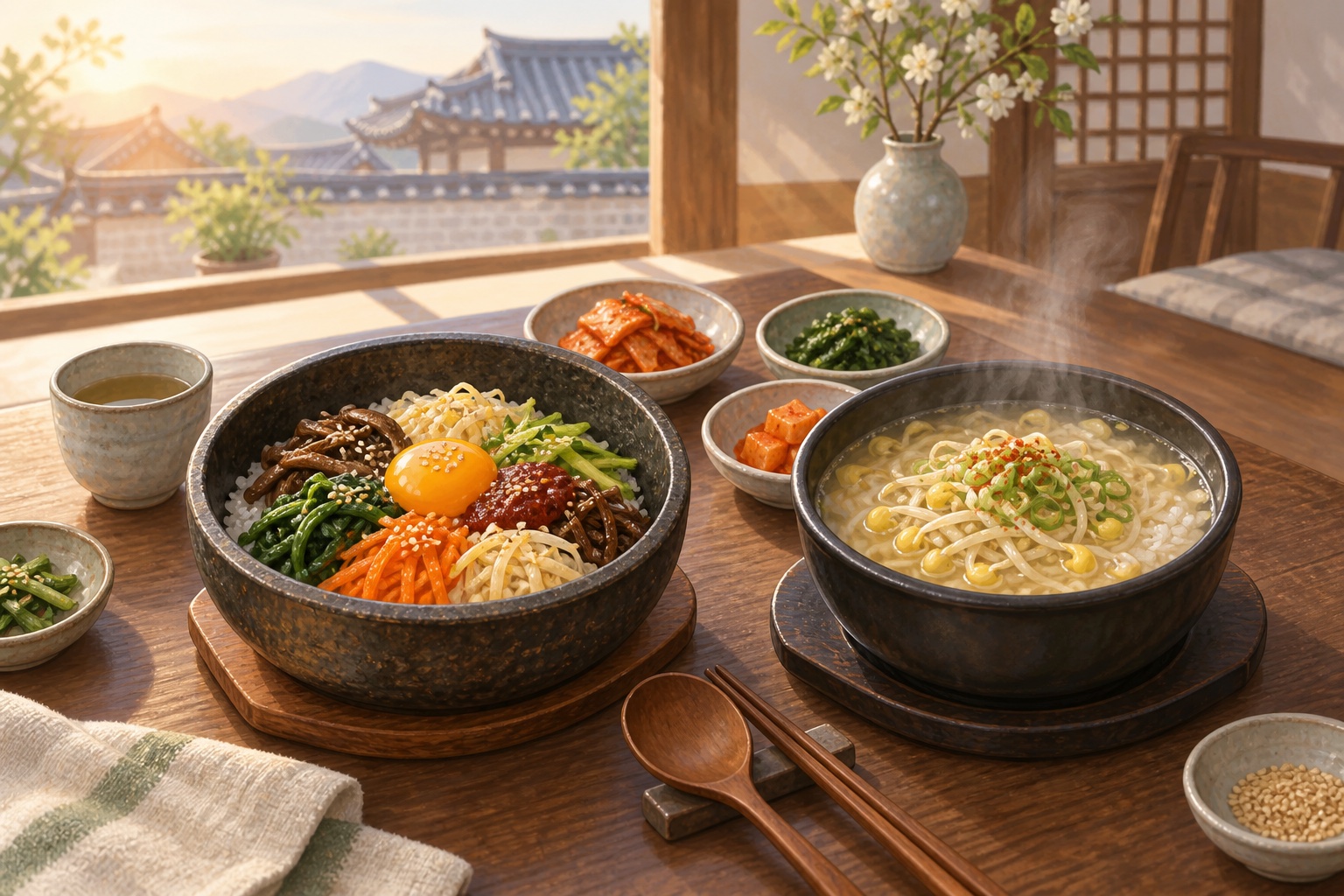
Photos of food in Jeonju often show a table that seems to need a whole group. What should you eat on your own? Start with two meals built around a bowl: bibimbap, rice mixed with toppings, and kongnamul gukbap, bean sprout soup with rice. Both feature bean sprouts, but wanting to mix a colourful bowl and wanting to spoon up warm broth are different appetites.
Look for yellow mung bean jelly in the bibimbap
Jeonju’s official introduction highlights bean sprouts, hwangpomuk, vegetables and gochujang chilli paste. Hwangpomuk is a yellow mung bean jelly. Looking for that ingredient gives you something specific to notice in an otherwise familiar bowl of bibimbap.
On the menu, distinguish yukhoe bibimbap from other versions. Yukhoe is raw beef; ask what meat is used if you prefer it cooked. The name Jeonju bibimbap does not guarantee a sizzling stone bowl or a particular set of side dishes. Check how the restaurant serves its version.
The small bowl beside the soup is for the egg
For kongnamul gukbap, look for the Nambu Market style. The city describes toryeom: repeatedly pouring hot stock over rice and cooked bean sprouts, then draining it away. The preparation is quite different from a bowl assembled for mixing.
If suran, a lightly cooked egg, arrives separately, you do not have to tip it straight into the soup. The city’s market guide describes adding broth and seaweed flakes to the egg bowl, or mixing the egg into the gukbap. What arrives varies by restaurant, but knowing the egg and seaweed can be eaten separately makes that extra bowl less puzzling.
Vegetables do not tell you what is in the stock
Neither dish is automatically vegetarian. The city’s bibimbap description includes rice cooked in beef-bone broth, while its Nambu Market soup description includes anchovy stock. Those are not universal recipes, but they show why asking to remove a meat topping may not be enough.
If you follow a vegetarian diet, ask separately about the rice stock, soup, toppings and side dishes. To adjust the heat, ask whether chilli paste or fresh chilli can come separately. A few specific questions are more useful than choosing by the vegetables visible in a photograph.
One meal now, or another bowl at breakfast?
Choose bibimbap when you want to mix several toppings into rice, or kongnamul gukbap when you want warm soup. Jeonju’s official guide also describes the soup as a breakfast dish. You do not need a night of drinking to have a reason to order it.
You could have bibimbap for lunch in the Hanok Village and, after staying overnight, eat breakfast at a gukbap restaurant around Nambu Market. Save 전주비빔밥 and 남부시장 콩나물국밥 as separate map searches. On a solo trip, finding the bowl you want now matters more than finding a restaurant that serves both.
Sources
- Visit Jeonju · Jeonju bibimbap Hwangpomuk, bean sprouts, chilli paste, beef-bone stock for rice and examples of raw-beef bibimbap; not treated as a universal recipe.
- Visit Jeonju · Nambu Market Nambu Market toryeom method, anchovy and kelp stock, egg and seaweed; health and hangover claims excluded.
- Visit Jeonju · Nambu Market food tour Breakfast context for bean sprout gukbap and egg-serving methods at one restaurant; dated opening hours and portions not generalized.