STORY
Gyeongju without a car: a day from ancient tombs to evening views
Get from Gyeongju Station to the centre, walk Daereungwon, Hwangnidan-gil and Cheomseongdae, then choose one evening stop.
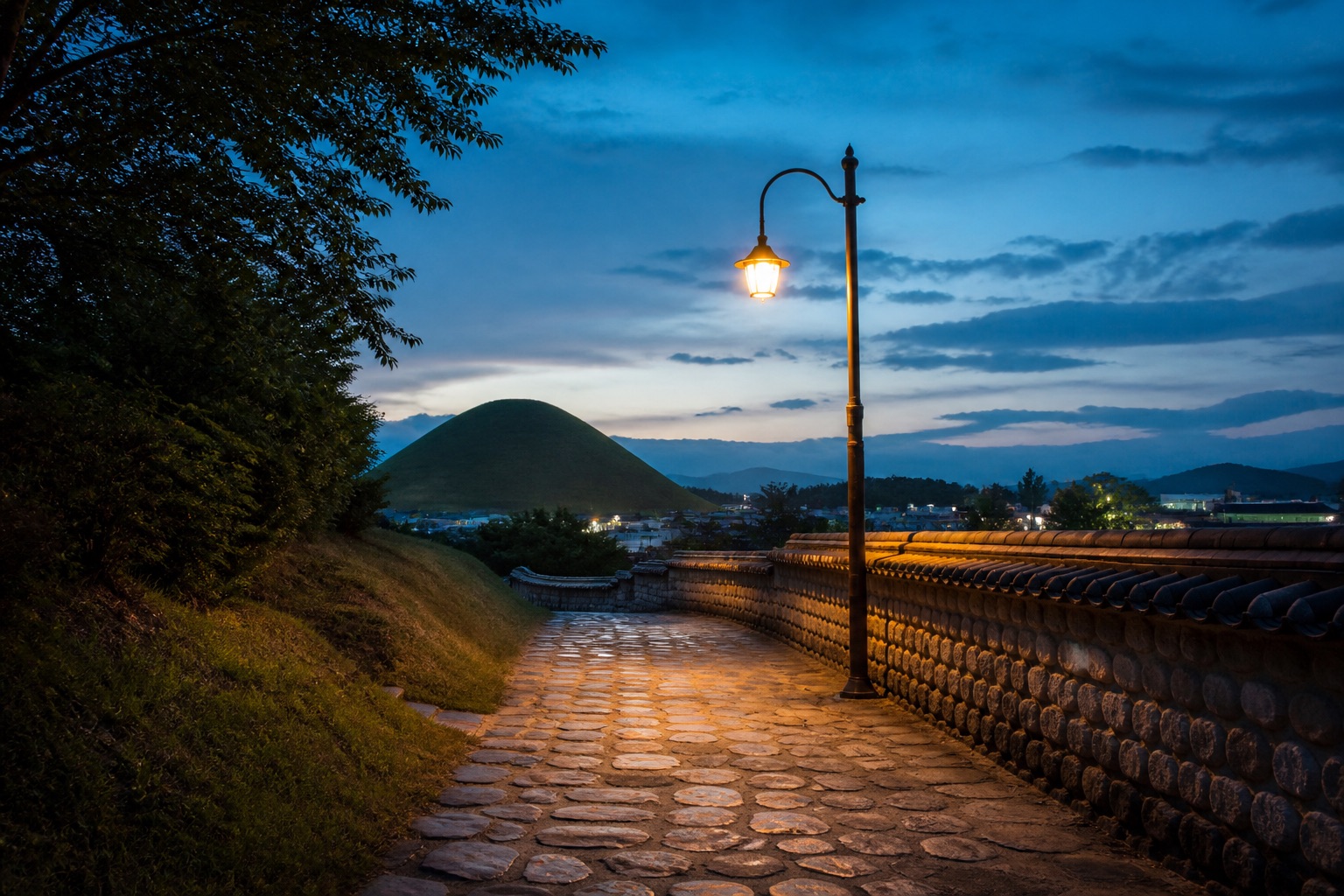
You want the green burial mounds, a hanok café and a night view reflected in water. Can you fit them into a day in Gyeongju without a rental car? For a first visit, keep to the central historic area and choose one evening destination. The useful distinction is that arriving at Gyeongju Station and beginning your walk are two separate steps.
Allow a separate journey from the station
The city lists Gyeongju Station at 80 Gyeongjuyeok-ro in Geoncheon-eup. Do not treat it as a central stop beside Daereungwon. Plan a bus or taxi journey into town after arrival. Older travel guides may use the name Singyeongju; check the actual map location rather than relying on a familiar station name.
Save both the station and your first destination, such as a Daereungwon entrance. If you have luggage, decide where to leave it and when it must be collected. Having to return to the station for a bag in the afternoon can change the entire shape of an evening in town.
Make room for lunch around Daereungwon
Daereungwon offers a walk among large Silla burial mounds. If you want to see inside a tomb, consider Cheonmachong, whose interior is open to visitors. Check the admission details for entering Cheonmachong separately from walking around the mounds.
Pair the visit with lunch or a café on Hwangnidan-gil. Korea Tourism Organization describes cafés and restaurants in converted hanok, traditional Korean houses, along with small shops. You can choose the café first. Leave the itinerary loose enough to drop a sight if you would rather stay for another drink.
After Cheomseongdae: a pond or a bridge?
Continue towards Cheomseongdae, the stone observatory, in the afternoon. The city includes it with Daereungwon, Donggung Palace and Wolji Pond, and Woljeonggyo Bridge in its central walking itinerary. Connect the actual entrances on a map to judge how much walking your own route involves.
For the evening, Donggung and Wolji offers reconstructed palace buildings reflected in a pond; Woljeonggyo offers a reconstructed bridge over Namcheon Stream. Think about the photograph that made you want to visit: pavilions reflected in water, or a long illuminated bridge? Before trying both, allow enough time to watch one place grow dark.
Your return journey decides whether to stay overnight
For a day trip, work backwards from your departure train, allowing for travel to the station and waiting time. Then see what room remains for an evening visit. If lingering after dark is the priority, compare that plan with a night in the city centre.
If Bulguksa Temple is your main reason for coming, plan the journey there first instead of adding it as a quick extra to this walk. A first car-free visit takes shape around a few things that fit together: Daereungwon, the lunch you want and the evening view you came to see.
Sources
- Gyeongju Tourism · Transport Current Gyeongju Station address in Geoncheon-eup; old timetables and fares are not reused.
- Gyeongju Tourism · Downtown walking itinerary Central walking area and descriptions of Daereungwon, Cheonmachong, Cheomseongdae, Donggung and Wolji, and Woljeonggyo; old fees and hours excluded.
- VISITKOREA · Korea Beyond Seoul: Daegu and Gyeongsangbuk-do Hwangnidan-gil cafés and restaurants in hanok, current station name and reconstructed Woljeonggyo as a night-view destination.
- Gyeongju LIVE BUS Official lookup for stops and bus arrivals on the travel date; no fixed route numbers or frequencies.
- Gyeongju Tourism · Luggage services Official luggage-service information for checking locations and conditions; no claim of current availability.
- VISITKOREA · Legacy train guide Evidence that an older official guide uses Singyeongju for the Geoncheon-eup station; old service and facility information is not presented as current.